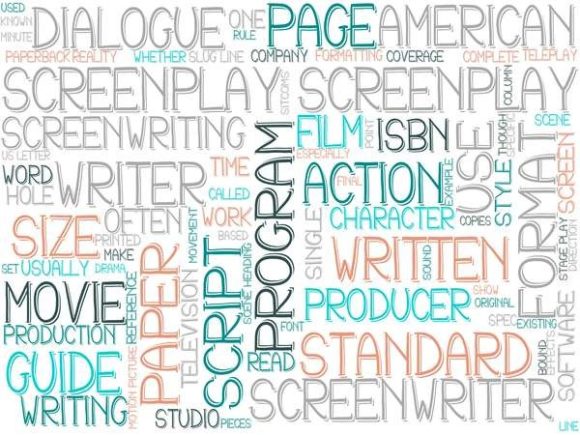
Screenplay Wordcloud Advertising: Visual Storytelling Meets Strategic Communication
At its core, Screenplay Wordcloud Advertising is not about stacking keywords or chasing algorithmic trends—it’s about translating narrative intent into visual resonance. Unlike generic word clouds that prioritize frequency alone, this approach treats language as a compositional element: weighted by emotional tone, contextual relevance, and audience alignment. Think of it as a typographic storyboard—where every font choice, curve, gradient, and spatial relationship serves the underlying message. Whether you’re promoting a film festival, launching an indie zine, or designing educational materials for high school literature classes, Screenplay Wordcloud Advertising bridges linguistic data with aesthetic intentionality.
How It Differs From Conventional Word Visualization
Most word clouds function as lexical summaries—raw outputs from text analysis tools where size equals occurrence. Screenplay Wordcloud Advertising introduces deliberate curation. A screenwriter might emphasize “resilience” over “conflict” in a character-driven drama not because it appears more often, but because it anchors the thematic arc. Similarly, a nonprofit advocating for literacy might visually elevate “access,” “voice,” and “imagination” while subordinating administrative terms—even if those appear frequently in internal reports. This method respects semantics over statistics, allowing designers, educators, and marketers to guide perception—not just reflect it.
The distinction becomes especially clear when comparing outputs. A standard cloud generated from a screenplay’s dialogue may balloon “said,” “yes,” and “no”—function words essential to pacing but irrelevant to theme. A screenplay-optimized version filters those out, applies sentiment scoring, maps character-specific vocabulary (e.g., “justice” appearing larger in a judge’s monologue than in a teenager’s), and layers typography to mirror tonal shifts—italicized for introspection, bolded for confrontation, fragmented for disorientation.
Practical Applications Across Diverse Contexts
Because Screenplay Wordcloud Advertising centers meaning before medium, its utility spans far beyond digital banners or social posts. Its adaptability emerges most clearly when examining real-world implementation across sectors:
- Promotions & Invitations: A theater company launching a revival of A Raisin in the Sun uses a wordcloud where “dream,” “dignity,” and “legacy” dominate—rendered in warm ochre and deep indigo, echoing the set’s color palette. The cloud appears on email headers, printed playbills, and lobby posters—creating visual continuity without repeating slogans.
- Educational Materials: High school English teachers generate dynamic clouds from student essays on To Kill a Mockingbird, highlighting recurring interpretive concepts (“bias,” “empathy,” “courage”) rather than surface-level nouns. These become discussion launchpoints—and later, collaborative classroom murals.
- Branding & Packaging Design: A small-batch tea brand crafts a cloud from customer reviews, surfacing unexpected associations like “calm,” “morning ritual,” and “grandmother’s kitchen.” Those phrases inform label typography, box layout, and even scent descriptions—grounding branding decisions in authentic voice, not market assumptions.
- Academic Research Dissemination: Researchers studying climate communication use Screenplay Wordcloud Advertising to visualize how policy documents frame risk—contrasting government reports (“mitigation,” “compliance”) with community testimonials (“loss,” “memory,” “water”). The resulting clouds appear in conference posters and open-access journal supplements, making qualitative nuance instantly legible.
Why Print and Physical Formats Remain Essential
While digital platforms offer interactivity—hover effects, animations, responsive scaling—the tactile impact of Screenplay Wordcloud Advertising in physical form carries unique weight. A magnet shaped like a vintage film reel, embedded with a cloud of words from classic noir scripts, does more than decorate a fridge—it invites conversation. Similarly, a wedding invitation suite using a custom cloud built from the couple’s shared journal entries creates intimacy no stock template can replicate.
Print applications also bypass algorithmic noise. A brochure for a community garden project featuring a cloud of locally spoken words—“compost,” “sunrise,” “shared rows,” “monarch”—holds authority in a neighborhood mailbox where digital ads vanish after one scroll. Even in UX design, print-based wordclouds serve as empathy anchors: designers tape them to studio walls during sprints, ensuring interface copy stays rooted in user language—not corporate jargon.
Workflow Integration for Creators and Teams
Adopting Screenplay Wordcloud Advertising doesn’t require abandoning existing tools—it enhances them. Most practitioners begin with familiar inputs: scripts, survey responses, interview transcripts, or social media archives. What changes is the filtering and weighting logic applied before visualization:
- Contextual Tagging: Assign each term to categories like “theme,” “emotion,” “setting,” or “character motivation”—not just part-of-speech.
- Weight Adjustment: Reduce prominence of filler words, amplify metaphors and action verbs tied to desired outcomes (e.g., “ignite,” “gather,” “reclaim” for activist campaigns).
- Typography Mapping: Link font families to narrative roles—serif for tradition or authority, rounded sans-serif for accessibility or youth, distressed type for historical grit.
- Spatial Choreography: Arrange words to imply movement—vertical stacks for progression, circular flows for cyclical themes, fractured clusters for tension.
This workflow integrates seamlessly with common creative pipelines. Graphic designers import tagged CSV files into vector tools; educators use free web apps to generate classroom-ready clouds from Google Forms data; marketing teams embed live-updating clouds in dashboards tracking campaign sentiment across channels.
Considerations for Ethical and Effective Use
With expressive power comes responsibility. Because Screenplay Wordcloud Advertising shapes perception so directly, practitioners must remain attentive to bias, omission, and representation:
- Avoid flattening complexity: A cloud summarizing refugee testimonies shouldn’t collapse distinct cultural, legal, and emotional dimensions into a single visual hierarchy. Layering—using transparency, color opacity, or nested frames—can preserve nuance.
- Verify source integrity: When pulling language from social media, account for bots, echo chambers, and platform-specific slang. Supplement with primary interviews whenever possible.
- Respect linguistic diversity: Bilingual or multilingual clouds should honor syntax, not force translation. A Spanish-English cloud for a bilingual book launch might place cognates (“libertad/freedom”) adjacently—but keep idioms intact (“dar en el clavo” stays, rather than being reduced to “hit the nail on the head”).
- Design for accessibility: Ensure sufficient contrast, avoid reliance on color alone to convey meaning, and provide plain-language alt text describing both content and composition (“Wordcloud shaped like an open book, with ‘story,’ ‘belonging,’ and ‘change’ largest; arranged left-to-right to suggest narrative progression”).
Emerging Trends Shaping the Practice
Screenplay Wordcloud Advertising continues evolving alongside broader shifts in communication design. Three developments stand out:
First, generative collaboration—where audiences co-create clouds in real time. At a university symposium on urban equity, attendees submitted phrases via QR codes; a live-generated cloud projected on stage shifted hourly, reflecting evolving dialogue. This transforms passive viewing into participatory sense-making.
Second, cross-modal integration. Designers now pair wordclouds with audio—so hovering over “thunder” in a climate documentary banner triggers a 0.8-second recording of distant storm sounds. In textile design, embroidery patterns follow cloud contours, making language physically tangible through stitch density and thread texture.
Third, archival reimagining. Libraries and museums use the method to reinterpret historical documents—not as static artifacts, but as living language systems. A digitized 1920s suffrage newsletter yields a cloud where “ballot” appears large, but “laughter,” “strategy,” and “ink-stained fingers” emerge with equal visual gravity, restoring human dimension to political history.
Getting Started Without Overcomplication
You don’t need proprietary software or data science training to begin. Start small:
- Choose a short, meaningful text—your mission statement, a favorite poem, or even a transcript of a meaningful conversation.
- Manually highlight 5–7 words that carry disproportionate emotional or thematic weight.
- Sketch their arrangement on paper: Where does “hope” sit relative to “uncertainty”? Does “home” anchor the bottom or float centrally?
- Translate that sketch digitally using free tools like WordClouds.com (with manual input) or Observable notebooks for basic customization.
- Test it: Show it to someone unfamiliar with the source. Do they grasp the intended emphasis? If not, revise weighting—not just size.
What makes Screenplay Wordcloud Advertising enduring isn’t novelty—it’s fidelity. Fidelity to voice, to context, to purpose. Whether rendered as foil-stamped business cards for a screenwriting coach, hand-painted tiles in a community center, or animated SVGs in a nonprofit’s annual report, it remains a quiet act of translation: turning what people say, think, and feel into something they can see, hold, and recognize as true.