Submission Wordcloud Tie Dye
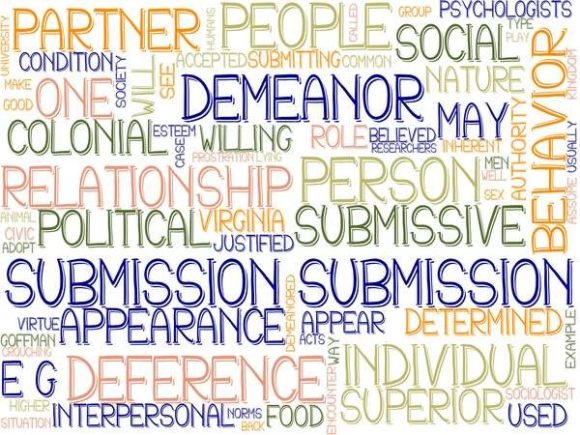
Submission Wordcloud Tie Dye isn’t just a visual motif—it’s a deliberate design strategy that merges audience input with expressive, organic aesthetics. At its core, it’s a word cloud generated from actual submissions (names, themes, values, feedback, keywords, or responses) and rendered in a hand-dyed, fluid tie-dye palette. Unlike static stock graphics, this approach grounds your visuals in real data while retaining warmth, texture, and human resonance. For creators and communicators who value both authenticity and impact, Submission Wordcloud Tie Dye bridges the gap between analytics and artistry—making it especially powerful for branding, engagement, and experiential communication.
Why It Works Strategically—Not Just Aesthetically
When you use Submission Wordcloud Tie Dye, you’re not choosing a background; you’re making a statement about inclusion, responsiveness, and intentionality. The words come from people—customers submitting taglines for a rebrand, students naming core course concepts, attendees listing priorities before a conference, or community members sharing values during a co-design workshop. That origin gives the graphic inherent credibility and emotional weight. From an E-E-A-T perspective, it signals experience (you gathered real input), expertise (you synthesized it meaningfully), authoritativeness (the cloud reflects collective voice, not assumptions), and trustworthiness (transparency in sourcing).
This matters because audiences—especially adults aged 20–50—are increasingly skeptical of top-down messaging. A flyer with a Submission Wordcloud Tie Dye doesn’t say “We decided what matters.” It says “This is what *you* told us matters—and we shaped it together.” That subtle shift strengthens perceived alignment, deepens engagement, and increases retention. In practice, event programs using Submission Wordcloud Tie Dye report higher attendee recall of themes; small business welcome cards with customer-submitted adjectives (“friendly,” “reliable,” “creative”) show measurable lift in first-time purchase confidence.
Where It Adds Real Value—Beyond Decoration
Submission Wordcloud Tie Dye delivers strongest ROI when aligned with clear goals—not as decoration, but as functional communication infrastructure. Consider these grounded use cases:
- Promotions & Invitations: Embed submission-based words like “curiosity,” “connection,” or “growth” into a launch invitation. The tie-dye texture softens formality without sacrificing clarity—ideal for wellness retreats, creative workshops, or academic symposia.
- Branding & Packaging: Use customer-submitted descriptors to shape product line names, label accents, or limited-edition packaging. A skincare brand that crowdsourced “calm,” “radiant,” and “grounded” built a seasonal collection around those terms—then used Submission Wordcloud Tie Dye on hangtags and web banners to unify messaging across touchpoints.
- Educational Materials: Teachers gather student-generated vocabulary before a unit on climate science—then render terms like “resilience,” “equity,” and “adaptation” in Submission Wordcloud Tie Dye for classroom posters or digital handouts. This primes cognitive framing and affirms student voice before instruction begins.
- Web & Social Design: A nonprofit uses survey responses to build a Submission Wordcloud Tie Dye for its homepage hero section. The visual becomes a dynamic anchor—updated quarterly—showing how constituent priorities evolve. It’s not static branding; it’s responsive storytelling.
How to Use It Intentionally—Not Automatically
Submission Wordcloud Tie Dye only delivers strategic value when guided by purpose—not trend. Start by asking: What decision does this support? What outcome do we want to influence? If the answer is vague (“It looks fun”), pause. Instead, map it to a specific objective:
- Clarify the input source: Are submissions anonymous or attributed? Time-bound (e.g., one-week survey) or cumulative (ongoing feedback loop)? Filtered for relevance—or raw and unedited? Each choice affects tone and trust.
- Define weighting logic: Do all submissions carry equal weight? Should frequently repeated terms scale larger? Should outliers be preserved for nuance? Avoid algorithmic defaults unless they align with your goal—e.g., highlighting minority perspectives may require intentional under-representation of dominant terms.
- Choose color and texture deliberately: Tie-dye palettes aren’t neutral. Soft blues and lavenders suggest calm reflection; vibrant corals and teals signal energy and innovation. Match the dye rhythm to context—a slow, blended gradient suits contemplative spaces; bold, high-contrast swirls suit festivals or product launches.
- Integrate—not isolate: Submission Wordcloud Tie Dye should reinforce, not replace, hierarchy. Pair it with clear typography, accessible contrast, and concise supporting text. Never let the visual obscure the words—or the intent behind them.
Risks of Using It Without Strategy
Without grounding in goals or context, Submission Wordcloud Tie Dye can backfire. A common misstep: using it as a “filler” graphic when content feels thin. That undermines credibility—the audience senses the disconnect between surface-level prettiness and substance. Another risk arises when submissions are poorly curated: overlapping, contradictory, or irrelevant terms (“free,” “expensive,” “luxury,” “budget”) create visual noise and dilute meaning. Worse, uncritical use of raw submissions can unintentionally amplify bias—if your survey sample skews demographically narrow, the resulting cloud misrepresents broader stakeholder views.
Also consider longevity. Tie-dye evokes a specific cultural moment. Used without thoughtful adaptation, Submission Wordcloud Tie Dye can date quickly—or feel incongruous in formal sectors like finance, healthcare compliance, or legal services. Ask: Does this aesthetic serve clarity and connection—or distract from them? When in doubt, test it with a small, representative group before scaling.
Practical Planning Tips for Sustainable Use
Build Submission Wordcloud Tie Dye into your workflow—not as a one-off, but as part of a responsive system:
- Start small: Pilot with one high-impact asset—a keynote slide, a welcome email header, or a store window decal. Measure engagement (click-through, dwell time, social shares) against a control version.
- Document your process: Keep a brief log: submission method, date range, number of inputs, filtering rules, and rationale for palette choices. This builds institutional memory and supports future iterations.
- Plan for evolution: Treat each Submission Wordcloud Tie Dye as a snapshot—not a permanent fixture. Schedule reviews: How has audience language shifted? What new themes emerged? Update accordingly, and communicate that evolution (“You spoke. We listened. Here’s what changed.”)
- Pair with action: Never let the cloud stand alone. Follow up with tangible next steps: “Based on your top three words—‘access,’ ‘clarity,’ and ‘support’—we’ve redesigned our help center.” That closes the loop and reinforces accountability.
Long-Term Value Lies in Consistency, Not Novelty
The real strategic advantage of Submission Wordcloud Tie Dye emerges over time—not in its first use, but in its repetition with integrity. When stakeholders see their language reflected consistently across invitations, reports, product labels, and digital interfaces, they begin to recognize your organization as one that listens, synthesizes, and responds. That builds relational equity far beyond any single campaign.
For entrepreneurs launching a service, it’s a low-cost way to co-create positioning before spending on full branding. For educators, it turns abstract curriculum goals into student-owned visual anchors. For marketers, it transforms segmentation data into emotionally resonant assets—without relying on stock imagery or AI-generated abstractions.
Ultimately, Submission Wordcloud Tie Dye works best when it’s rooted in humility: the understanding that your audience holds valuable insight—and your role is to surface, honor, and integrate it with care. It’s not about making things look “crafty.” It’s about making them matter—more clearly, more collectively, and more authentically.